How to build a home schedule that works

If you’re anything like me, juggling the homeschooling of three energetic boys and in general young children can sometimes be so overwhelming. Between the teaching, snack breaks, constant tidying up of little people and cooking, it can feel like the day is running us instead of the other way around. But fear not! I’m here to share some tips on how to build a home schedule that actually works—at least most of the time.

Be flexible

First things first, let’s talk about flexibility. As much as I love the idea of a perfectly structured day, with every minute accounted for, I’ve learned that life with kids, especially boys, just doesn’t work that way. There’s always going to be something that throws a wrench into our plans, whether it’s spilled food, an unexpected discovery of a “treasure” in the garden, or a tired and unmotivated gloom of the day. So, while it’s important to have a schedule, it’s equally important to hold it loosely. I like to think of our schedule now as more of a guideline than a strict timetable.

Create blocks of time

One thing that has been a game-changer for us is creating blocks of time instead of specific time slots. For example, we have a morning block for our core subjects like devotion, maths, reading, penmanship etc, an afternoon block for creative activities, and an evening block for family time. This way, if we spend a little extra time on a science experiment (or cleaning up from said experiment), it doesn’t throw the whole day off. It gives us the flexibility to dive deeper into subjects that capture the boys’ interest without feeling rushed.

Another tip is to incorporate plenty of breaks. Boys, in particular, seem to have an endless supply of energy, and expecting them to sit still for hours on end is a recipe for disaster (I’ve tried and learnt my lesson)! We do short bursts of focused learning followed by movement breaks. This may mean a quick game of hide and seek, a workout break, a few minutes on the trampoline, or even a spontaneous dance party in the living room with a Youtube video. These breaks help them burn off energy and come back to their work refreshed and ready to concentrate. I’ll always communicate to them and let them know what’s coming next in the day. This helps to prevent tantrums and resistance when it’s time to move on to the next activity.

Time for ourselves

It’s also crucial to build in some time for ourselves – even though most of the time it feels absolutely impossible! This season simply doesn’t permit me to have my free time as I would like all the time so I am learning that it is possible to infuse things that I enjoy throughout my day. Considering this as self care really helps me to know that I am not counting myself out of the family schedule and planning.

Whether it’s a quiet cup of tea before the boys wake up, a quick workout, some time spent in prayer and reflection, spraying a little perfume, a 5 minute make up routine, or putting on smart clothes for the day, taking care of ourselves even in the littlest way helps us to take better care of our families Remember, you can’t pour from an empty cup. So, carve out those moments of rest and rejuvenation whenever you can.

Use tools to stay on track

Using tools to stay on track can be incredibly helpful in maintaining a sense of order in the home. I have found that keeping a family calendar on the fridge helps everyone stay informed about daily plans and responsibilities. Additionally, a simple to-do list or planner can bring structure to the day and prevent tasks from feeling overwhelming. Personally, I enjoy using a prayer journal alongside my schedule—it not only keeps me organized but also allows me to reflect on God’s presence in my day-to-day life. Whether it’s a digital app or a traditional planner, having a system in place makes a big difference in staying consistent and finding peace amidst the busy routine.

Reassess and adjust regularly

Reassessing and adjusting regularly is crucial to maintaining a healthy and sustainable home schedule. It’s one of the things that I really struggled with initially, but the reality is that life is constantly changing—children grow, schedules shift, and unexpected circumstances arise. Taking time each month or even each week to evaluate what’s working and what’s causing stress can make a big difference. I like to pray over my schedule, asking God for wisdom to discern what needs to be adjusted. If a routine is feeling burdensome, it might be time to simplify or delegate tasks. Being flexible allows for grace in our daily lives, ensuring that our schedule serves us rather than us becoming slaves to it. Adjustments are not signs of failure but of growth and intentionality in creating a home filled with peace and joy.

So there you are! A few tips which I hope you’ll find helpful and encouraging. Building a home schedule that works is all about finding what fits your family’s rhythm and being willing to adjust as needed. With a little planning, a lot of flexibility, and a healthy dose of humor, you can create a routine that keeps everyone learning, laughing, and loving the homeschooling and home life. Keep up the great work, mama! You’ve got this.

Dealing with monotony and routine as a stay at home mum

Being a stay-at-home mum is a beautiful calling, but it often comes with the challenge of monotony. The endless cycle of laundry, cooking, cleaning, and always being switched on to care for our children can sometimes feel repetitive and even overwhelming. It’s easy to lose sight of the bigger picture when daily tasks seem to blur into one another. However, as Christian mothers, we are reminded that even in the most mundane moments, God is at work in our lives and in the lives of our families. If we truly look, we’ll find Him.

One of the most encouraging truths in Scripture is found in Colossians 3:23: “Whatever you do, work at it with all your heart, as working for the Lord, not for human masters.” This verse reminds us that our work at home is not insignificant. Every nappy changed, every meal prepared, and every book read is an opportunity to serve God and our families with love and dedication. When we shift our perspective to see our daily tasks as acts of worship and privilege, we can find deeper meaning in what might otherwise seem mundane.

Gratitude helps

One way to combat the monotony of routine is to cultivate a heart of gratitude. Philippians 4:6 encourages us to bring everything to God with thanksgiving. Taking a moment each day to thank Him for the little blessings—our children’s laughter, the comfort of our home, the provision of food, hot water, clothes—can really transform our outlook. Gratitude refocuses our hearts on the goodness of God rather than the repetitiveness of our routines, and it helps us to see abundance rather than lack.

Spiritual renewal

As mothers, we pour so much into our families, but we must also allow ourselves to be filled. I’ll hold my hand up and be the first to admit that sometimes sheer exhaustion makes me demotivated to pour into myself spiritually, but spending some time in prayer, reading scripture, or even listening to worship music while doing household chores does nourish our souls and keep us connected to God. When we prioritise our relationship with Him, we are better equipped to handle the demands of daily life with patience, wisdom and joy.

Building and nurturing friendships

Finding community is another key aspect of overcoming monotony. Proverbs 27:17 says, “As iron sharpens iron, so one person sharpens another.” Whether through church groups, Bible studies, or simply connecting with other mothers, having a support system helps us navigate the challenges of motherhood. Sharing experiences, praying together, and encouraging one another can breathe new life into our routines. I’ve personally found that taking some time to speak with and laugh with friends helps me to reconnect with a different part of myself, which in turn helps me to feel refreshed.

Monotony and simple living can also be a gift to us. In a world that constantly seeks distraction and busyness, the slower rhythms of homemaking allow us to cultivate a heart of peace and contentment. When we embrace the simplicity of our daily lives, we are able to focus on what truly matters—our relationship with God and the love we share with our families. God often speaks to us in the quiet moments, in the steady rhythms of daily life, reminding us that He is present in every small act of love and service.

A quick tasty crepe recipe

There’s nothing quite like the joy of watching my boys devour a plate of homemade food. Every other day, I fry up a batch of delicious crepes to help fill the hunger gaps between breakfast and lunch, and they never fail to bring smiles and excitement to their faces. These crepes are light, slightly sweet, and perfect for rolling up with any number of delicious fillings (we love bananas, blueberries, strawberries, Nutella and honey). Best of all, they come together quickly, making them a great go-to recipe for our busy mornings of play and homeschooling.

Crepe recipe

The recipe is simple, using cupboard staples that I always have on hand. Here’s what you’ll need:

  • 1 cup all-purpose flour
  • 3 eggs
  • 1 1/4 cups milk
  • 2 tablespoons melted butter or oil
  • 2 tablespoon sugar
  • 1 teaspoon vanilla extract
  • 1 teaspoon nutmeg
  • A pinch of salt

To make the crepes, start by whisking the eggs and milk together in a bowl. Add in the flour, sugar, salt, vanilla extract, nutmeg, and melted butter or oil, mixing until smooth. The batter should be thin, almost like heavy cream. Heat a lightly greased non-stick pan over medium heat and pour in just enough batter to coat the bottom, swirling it around for an even layer. Cook for some seconds until the edges lift slightly, then flip and cook for another 30 seconds. Stack them up as you go, and they’ll stay nice and warm, and fill your home with a sweet aroma.

My boys love these crepes with a drizzle of honey, a sprinkle of cinnamon sugar, or a spread of jam. Sometimes, we even get fancy with Nutella and fresh berries. They’re incredibly versatile and can be made sweet or savory depending on what we have on hand. Whether you’re making them as a quick snack or a special treat, these crepes are sure to be a hit in any household!

Beyond just making a delicious snack, preparing crepes together has become a cherished tradition in our home. My boys love to help mix the batter, pour it into the pan, and even try their hand at flipping. These moments in the kitchen aren’t just about cooking—they’re about laughter, learning, and creating lasting memories. When I think about my grandma, one of the things I remember her for is for the baking that she did, and how she put so much love and care into making cakes for others. I hope that one day, the boys will pass down this simple recipe to their own families, remembering the warmth and joy we shared while making them.

How to raise confident and resilient boys

Raising confident and resilient boys in today’s world is challenging, unpredictable, full of constant adjustments, chaotic, downright exhausting, deeply fulfilling, messy and full of lots of teaching moments. As a homeschooling mum to three boys who are still babies to me (6,4 and 2 years) I am slowly learning that raising strong, capable young boys into men has become one of our aims. This isn’t about giving them an ego boost or bubble-wrapping them from failure, but about teaching them how to handle themselves when life’s inevitable bumps occur, and to deal with imperfections and bruises with grace, grit, and from a strong foundation in Christ.

Perseverance

One of the first and constant lessons that we are currently working on, is that failure and imperfection isn’t the enemy. When they get answers wrong, make a mistake or do something imperfectly, their natural response is to shut down, give up or walk away in tears because of the feelings of frustration and disappointment. In our home, my husband and I are consistent in pushing back against this and communicating to them that we celebrate mistakes (sometimes with a little treat) because they are an opportunity for us to learn and grow stronger.

When my first born son struggles with a concept during our learning time, or he colours out of the line during art time, we respond with enthusiasm because we have a chance to try again, and sometimes that is what life gives us- a chance to try again. We encourage him to know that it is ok to feel what he is feeling, but that he should never quit on himself. Resilience isn’t about never falling down; it’s about getting back up, dusting off the sawdust, and trusting that God will guide and strengthen us as we try again.

Confidence, too, is something that we are nurturing. As our boys are very young, we offer this through constant praise the majority of the time because I recognise that our hearts need to know that we are seen by those closest to us, and as their mama, it is my joy to let them know that I see them, love them, celebrate and affirm them.

There are moments when we explain that as they grow, their confidence wont come from constant praise but from real accomplishments and faith in God’s plan. So we do occasionally let them struggle and push through math problems, writing that tricky word for what feels like the hundredth time, and learning how to work together to serve one another during meal times (putting cutlery out, and setting the table). When they achieve something after working for it, the confidence sticks because they know they earned it through perseverance and God’s strength.

Service unto each other and strangers

My boys are very visual, and I quickly learnt that in order to capture their attention and imagination, it would be very helpful to give them a vision of the kind of boy and man that God is helping them to become day by day.

We usually say something along the lines of:

“God has created you for a purpose, and no challenge is too big when you walk in His strength. Keep trusting Him, keep learning, and keep growing into the man He is shaping you to be.

“You are a warrior for Christ, and true strength comes from faith, kindness, and perseverance. No matter what happens, remember that God is always with you, guiding your steps.”

“When you do hard things, God is helping you grow stronger and stronger”.

We are all naturally self centered, and children demonstrate that to the highest degree because they are children(!), have constant legitimate needs and are under developed in their understanding, maturity and expression of their needs.

Another one of the areas that I am working on when it comes to raising resilient sons is teaching them to serve each other and other people. Serving each other doesn’t always feel pleasant because they bicker, fight and compete against one another, but by learning the discipline of service to one another, they fulfill a really important goal of our family which is to love and work together as one in our home.

When they understand that their strength, and their faculties (hands, feet, eyes, speech) are meant to be used for God’s glory it gives them an external motivation. So gentle reminders are given when we are at home and out in public to help them think outside of themselves and to see the world and people around them—whether that means helping to open the door for someone or comforting a friend who’s has been hurt— it’s all to help them develop a deep, quiet confidence that isn’t rooted in arrogance, but in purpose. Plus, let’s be honest, there’s nothing quite as humbling as helping to clean up after your brother or others! Jesus Himself taught us that true leadership comes through service, and I want my boys to follow His example, and understand the inner strength it takes to think of others.

It’s OK to cry

We are at a stage in life with our boys where crying is the resounding sound in our home, so let’s talk about emotions for a second. We are balancing the importance of them talking with us when they are upset over screaming and shouting. Simultaneously we acknowledge that being strong doesn’t mean stuffing down their feelings and pretending that they are ok when they aren’t.

Boys also need space to express frustration, sadness, and even joy without being told to “be strong.” In our home, we encourage each other to talk things through—sometimes by removing them from a tense environment because resilience isn’t about hiding emotions but trying our best to handle them in a Christ-centered way. Praying together, reading God’s Word, and seeking His wisdom helps us all to process our emotions in a way that strengthens our faith and character.

Role Models

Positive role models also play a crucial role in building resilience. Boys need to see strong, faith-filled men who exemplify integrity, perseverance, and humility. Whether it’s their father, a pastor, a coach, or a trusted mentor, having godly role models shows them what it means to live with strength and grace under pressure. When they see men who turn to God in times of struggle, who admit their mistakes, and who stand firm in their beliefs, they learn to do the same. Surrounding them with wise, godly counsel reinforces the values we teach at home and gives them examples to emulate as they grow. As they are young, we have begun that journey for them through stories and books, as well as spending quality time with daddy.

Series and books that they enjoy are Bibleman, Veggie Tales, Emmanuel’s Dream: The True Story of Emmanuel Ofosu Yeboah, Ten Boys Who Made a Difference (Lightkeepers) and much more.

Proverbs 22:6 reminds us to “train up a child in the way he should go, and when he is old, he will not depart from it.” At the end of the day, our goal isn’t to raise tough guys; it’s to raise kind, courageous, and faithful men who will stand firm in a shaky world. With a lot of prayer, patience, and probably a lot more mistakes, I trust that God will shape them into exactly who He created them to be, and we look forward to celebrating the good fruit that comes from their lives!


When doubt creeps in: Encouragement for the homeschooling mum who feels she might have made the wrong choice

I don’t know about you, but there are some days when I look around at the chaos of our homeschool and wonder, What in the world is going on? The boys are arguing, fighting and screaming over toys, I am getting resistance with sit down book work and reading, and my youngest is determined to turn all the walls of my house into his museum of drawings. Meanwhile, I’m nursing a cold cup of coffee, a very messy kitchen (even though it was cleaned the night before), and sleepiness from waking up at 4:45am just to get a head start on the day before everyone wakes up. With fatigue, strain, frustration and overwhelm at an all time high, its easy to question whether we made the right decision to homeschool.

Some days, these are my thoughts, so first of all, I want to assure you that if you have felt any of this, you are not alone. There is no homeschooling mum on this planet (or probably even in the universe, if alien homeschooling mums exist) who hasn’t wondered at least once if she made a monumental mistake. It’s normal. We’ve all had those moments of doubt—when the curriculum doesn’t click, when the kids resist every lesson, or when we constantly feel that we are not enough. But let me remind you of something that God has been whispering to my heart lately: His grace is sufficient. Even on the hard days. Especially on the hard days. Here’s a beautiful hymn for you to tuck away in your heart.

I get it, though. It’s easy to romanticise homeschooling before we start. We picture morning devotionals with well-behaved children, afternoons spent exploring nature, and evenings reading classic literature in a cosy setting. Reality looks a little more like Weetabix smeared on every surface, (AND THEN DRYING IN A BLINK OF AN EYE!!), disruptive food requests every. five. minutes, and a “read-aloud” where you’re the only one actually listening to the story. And yet, even in the mess, there are so many beautiful moments waiting to be noticed.

A few tips and encouragement

When doubt comes knocking, I’ve found it helps to revisit why my husband and I chose this path in the first place. For me, it’s about nurturing my boys’ hearts as much as their minds. It’s about weaving our faith into their education and having the freedom to teach them in a way that honours their unique gifts and strengths. Yes, even when those gifts include making fart noises during lessons. (Lord, give me strength with these boys.)

Sometimes we just need to change our perspective. If a lesson is flopping or the kids are bouncing off the walls, maybe it’s time to pause the plan for the day. Go outside for a walk (which is my absolute go to), build a blanket fort, or get in the kitchen and bake and call it “life skills.” It all still counts. I have learnt that homeschooling isn’t about sticking rigidly to a schedule; it’s about creating a life where learning happens naturally and joyfully—well, most of the time for the children, and for us as mums.

Another thing that helps is connecting with other homeschooling mums. Join a co-op, find a support group, or just call that one friend who always “gets it.” There’s something so comforting about hearing someone else say, “Oh, me too!” We were made for community, and sharing our struggles often lightens the load.

Grace is available

Don’t forget to extend yourself some grace. God didn’t call us to this journey because He thought we would do it perfectly. He called us and wants us to depend upon Him every step of the way. Your children don’t need a perfect teacher; they need you. They need your love, your laughter, and yes, even your occasional meltdowns. (I firmly believe that seeing us apologise, pray for strength, handle difficult moments and regroup is an important life lesson for them.)

So, on the days when you’re tempted to throw in the towel, remember this: You are planting seeds, even when you can’t see the harvest yet. The hard days are part of the story, but they’re not the whole story. And who knows? Maybe one day, your children will look back on these years and thank you for the gift of learning together. They’ll remember a specific day (that you thought was pretty awful) and say that was one of the best moments of their lives. Or at least in my case they’ll remember how to bake really good cakes. Either way, you’re doing just fine, Mama. Keep going. ❤️

Creative Christmas prep ideas for mums

Hey mama, it’s that time of year again!

The air is getting cooler and crisper, the days shorter, darker, and our online feeds slowly filling up with all the Christmas inspiration. Yes, the festive period is upon us! Preparing our homes and hearts for the Christmas season can be such a meaningful and joyful time and in this post I’ll be sharing a few creative and unique ways to make this festive period extra special for you and your family, as I try to do the same for mine!

I hope you’ll find some inspiration that you can personalise!

1. Create a “gratitude and prayer garland”

This year, we are getting hands on with our decorating, and having fun expressing thankfulness by making prayer garlands. Transform a simple decoration into a daily practice of gratitude and prayer by cutting out paper strips in festive colors and encourage each family member to write down something that they are thankful for or a prayer intention every day. Then, link the strips together to form a garland. Each link represents a moment of gratitude or a heartfelt prayer. By Christmas, you’ll have a beautiful, meaningful decoration that wraps your home in love and thankfulness. Hang it somewhere where everyone can see, and maybe even make a tradition of reading them all aloud on Christmas Eve.

2. Host a nativity play at home

We love a good role play in our house, and my boys get excited at any chance to build houses, forts, and play pretend. At this time of year, you could turn your living room into a stage for a homemade Nativity play! Get your children involved in making simple costumes and props. Let them choose their roles—perhaps one of your children wants to be a shepherd, another an angel, and another might want to narrate the story. Rehearse together and perform it for family and friends. This activity not only brings the Christmas story to life for everyone but also creates a cherished family tradition. Plus, it’s a wonderful way to remind everyone of the true meaning of Christmas in a fun and engaging way.

3. Set Up a “Christmas kindness countdown”

I love that the festive season encourages us to not only enjoy with our families, but to think of ways that we can serve others. In our home, we have been focusing on service, and ways to make someone feel loved. The boys are more excited about the toys that they will receive for Christmas so this activity is perfect. Instead of the usual Advent calendar, you can create a “Christmas Kindness Countdown” where each day involves a small act of kindness. You then write down different activities on slips of paper and place them in numbered envelopes or boxes. Activities can include things like making a card for a neighbour, donating gently used toys to charity, baking cookies for locals and church members, or even calling a relative to spread some cheer. This helps instill a spirit of giving, and compassion in our children and shows them that Christmas is about spreading love and joy to others.

4. Start a Christmas book tradition

If you love books, and your children do this could be the perfect time to build a collection of Christmas-themed books that you only bring out during the festive season. Each evening, you could gather around the tree or in a cosy space to read a different story. You can include classics along with stories that highlight the nativity. This tradition fosters a love of reading, creates cozy family moments, and helps children connect with the stories and values of Christmas. Over the years, these books will become cherished parts of your family’s holiday heritage. We are book lovers so this will be perfect for us to introduce!

Some of the books that we’ll be reading:

A very noisy Christmas

The nativity

5. Create a “journey to Bethlehem” display

Dedicate a space in your home to a “Journey to Bethlehem” display that evolves throughout Advent. I saw this stunning nativity display in Home Sense last year and I am still kicking myself for not getting it. It was so beautiful and I wanted to use it as part of our festive decorations to help point the kids hearts to our wonderful Saviour. So you could start with a bare stable and gradually add figures of Mary, Joseph, and the shepherds moving closer to the stable each day. Incorporate readings from the Bible and reflections on each character’s journey and faith. This daily routine helps reinforce the nativity story deep into our hearts and makes the anticipation of Christmas more meaningful as our children witness the progression of the journey to the birth of Jesus.

6. Host a Christmas craft night

Children love crafts, and it is such a great and easy way to spend time having fun together. Set aside one evening a week for a family Christmas craft night. Gather materials to make ornaments, wreaths, and other decorations. Listen to Christmas music, sip on hot chocolate, grab some snacks and let the creativity flow! These homemade crafts can be used to decorate your home or given as heartfelt gifts to friends and family. This tradition not only beautifies your home but also provides a wonderful opportunity for family bonding and creates lasting memories.

7. Set up a giving jar

Place a large jar in a central location in your home and label it the “Giving Jar.” Throughout the holiday season, encourage family members to contribute spare change or small bills. At the end of the season, decide together which charity or family in need you’ll donate the collected money to. This simple act teaches children about generosity and the importance of helping others, in line with the Kindness Countdown.

8. Plan a “Silent Night” evening

I saw this idea and loved it! We’ll definitely be looking to add this to our Christmas tradition. Choose one evening to turn off all electronic devices and enjoy a “Silent Night” together. Light candles, play soft Christmas music, and spend the evening in quiet activities like reading Christmas stories, doing puzzles, or simply talking. This can be a peaceful retreat from the hustle and bustle of the season which is filled with socialising and shopping, and provides a chance to reconnect and unwind with loved ones. Equally, joining a carols night

9. Create Personalised Christmas cards

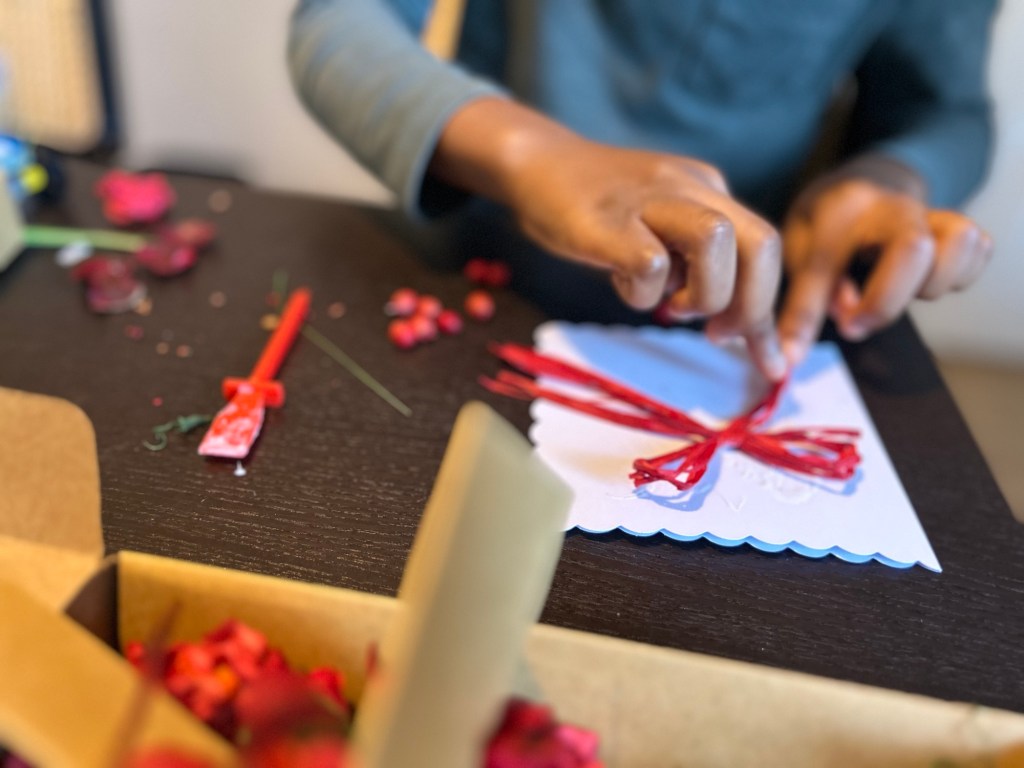
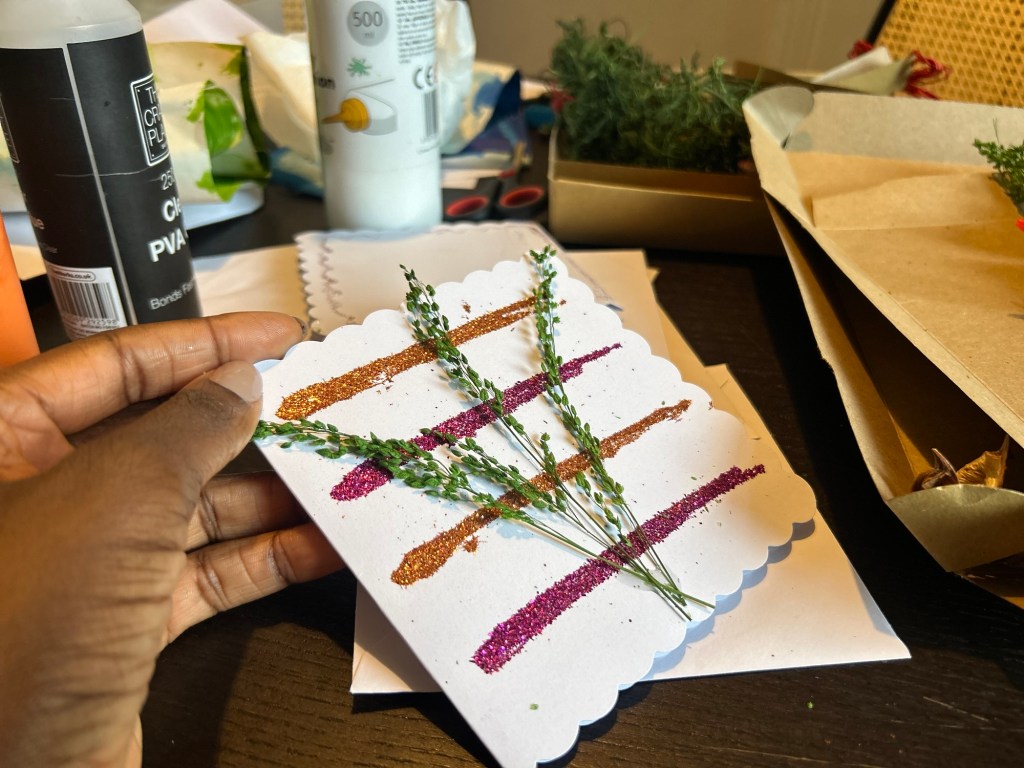
Instead of buying pre-made cards, gather your family to create personalised Christmas cards for friends and relatives. Use craft supplies like stamps, stickers, and glitter to make each card unique. Include a heartfelt message or a family update inside. This activity allows for creativity and thoughtfulness, and recipients will surely appreciate the time and effort put into each card.

Another meaningful practice is to focus on the importance of presence over perfection. It’s easy to become overwhelmed by the desire to create the perfect Christmas experience for your family. But remember, the most cherished memories often come from simple moments spent together. For example, instead of stressing over a perfectly decorated home, involve your children in the decorating process. Embrace the imperfections and enjoy the laughter and creativity that come with it. Or, set aside time for a family evening of board games or baking cookies, without worrying about the mess. By prioritising presence, we can give our hearts the chance to breathe, and just enjoy the gift and blessings that we have.

I hope these ideas inspire you!

Are there any that you would do? or share what you currently do with your family at Christmas time, I’d love to know.

I am struggling with time management

As mothers, our days are mostly filled with a whirlwind of activities—preparing meals, caring for children, maintaining a home, possibly juggling a job, and managing countless other tasks. It’s easy to feel overwhelmed and wonder how we’ll ever get everything done! Time management can feel like an impossible task, especially when our time is no longer just our own. But take heart sis, for we are not alone in this struggle. God sees our efforts and knows the desires of our hearts. He offers us grace, not perfection, and in that grace, we can find ways to manage our time better, to honour Him, and to bring peace to our homes.

Here are four practical tips that can help you thrive more when it comes to this area of your life.

1. Prioritise your day with God at the center

It’s easy to get caught up in the busyness of life and forget to take time for God, but making Him the foundation of our days brings a profound sense of peace and purpose. Start your day with prayer or a short devotion, asking God for guidance in managing your time. Psalm 90:12 says, “Teach us to number our days, that we may gain a heart of wisdom.” By seeking God’s wisdom first, we align our priorities with His will, which can help us focus on what truly matters each day.

Imagine your day begins with the children waking up early and immediately needing your attention. Instead of jumping straight into the chaos, take five minutes to pray or read a Bible verse while they’re still in their rooms. Even a short moment of quiet time with God can change your perspective and give you the patience and wisdom to navigate the day.

2. Set realistic expectations

As mothers, we often set high expectations for ourselves, thinking we need to do it all. However, Proverbs 31, the famous chapter about the virtuous woman, reminds us that she didn’t do everything at once. She focused on what was necessary in each season of her life. Setting realistic goals for your day helps prevent burnout and allows you to appreciate your accomplishments, no matter how small they may seem.

You might have a to-do list that includes cleaning the entire house, preparing three homemade meals, and organising a playdate. This instantly creates so much overwhelm as you have to juggle these tasks as well as taking care of your children. Instead, consider focusing on one or two key tasks and letting go of the others. Maybe today, it’s just tidying up the kitchen and spending quality time with your kids. Celebrate what you’ve done rather than what you didn’t get to. It all equals success!

3. Delegate and accept help

God created us to live in community, not in isolation. Galatians 6:2 encourages us to “carry each other’s burdens,” which means it’s okay—and often necessary—to ask for help. Whether it’s involving your children in household chores, asking your spouse to take on certain tasks, or accepting help from friends or family, delegation can lighten your load and create a sense of shared responsibility within your family.

Perhaps you’re struggling to find time to cook dinner while also helping your children with their homework. Instead of trying to do both simultaneously, consider asking your spouse to handle homework time, or involve the kids in meal preparation. It might not be perfect, but it teaches them responsibility and gives you more breathing room.

4. Embrace flexibility and grace

Life with children is unpredictable, and even the best-laid plans can go awry. It’s essential to embrace flexibility and extend grace to yourself when things don’t go as planned. James 4:13-15 reminds us that we don’t know what tomorrow holds, but we can trust God with our plans. Allow yourself the freedom to adapt when necessary, and let go of the need for everything to be perfect.

You might plan a productive day, only to have your child come down with a cold, throwing all your plans out the window. Instead of feeling defeated, acknowledge that caring for your child is the priority for that day. You can reschedule other tasks, knowing that God sees your heart and honours your willingness to serve your family.

Conclusion

Motherhood is a beautiful yet challenging journey, and time management is a skill that many of us are continually developing. It takes time to find and fine tune a rhythm that works for you and your family. Remember, God’s grace is sufficient for you in every season. You are doing an incredible job, and He is with you every step of the way.

May you find peace, joy, and purpose as you navigate your days, knowing that you are held in His loving hands, and you can indeed thrive here!

Alethea

The beauty of homemaking

One of the beautiful things about homemaking is that as women and mothers we have the gift and the ability to create a beautiful environment in which everybody that lives in it feels loved, treated as though they belong and nurtured so they thrive.

It requires our undivided intentional attention. Our heart, our soul, our efforts, our time, our style, our sacrifice, our willingness, our openness, our strength, our lives. The beauty found in homemaking is really in our ability to personalise and tailor a wholesome life for the people closest to us, to keep loving the one that we have chosen to commit to for the rest of our lives, and to serve the people who have grown and come from our very own bodies.

It is hard, beautiful sacrificial work. It is a worthwhile work that reveals a lot within us so that we can grow and develop in character. The home stands as a testament to the beauty and life of diligent hands and a faithful heart. Within the walls of our homes, joy and sorrow are shared, burdens are lightened, and the spirit finds solace.

The dining table has the potential to become an altar of fellowship, where laughter echoes, tears are gently wiped away, and the bonds of family and friendship are strengthened over shared meals and meaningful conversations. It is in this sacred space that love is nurtured and memories are sown. It is akin to a garden of life where seeds are sown into the hearts of children. Such is the sacred art of homemaking, a divine vocation, where earthly tasks become heavenly acts, and a humble abode is transformed into a haven of holy love.

If we look closely enough, we’ll see God’s goodness in what He has given to us. Our portion is evident of His faithfulness.

Homemaking is a tender art, a symphony of daily rituals that breathe life and love into a home. From the sweep of a broom to the arranging of fresh flowers, each task is a stroke of comfort and care if we see it that way. The homemaker’s touch can bring warmth to every corner, infusing the air with a fragrance that only a woman can bring to her environment when she loves it. It’s in these small, thoughtful gestures that a house becomes a haven, a place where the soul finds rest and the heart feels cherished.

In the morning when we wake up we get to decide on the tone that will be set for our homes. It can be filled with so much purpose, even in the midst of difficulty and challenge. The clinking of dishes, the rustling of pages as lists are made and tasks are planned, all contribute to a rhythm that reflects the reality of a household filled with life.

As a homemaker, you get the chance to dress each room, giving it a story, curated with love and attention to detail and reflecting the unique personality and values of those who live there. As a mama to little children, the season is extremely busy and exhausting. My days begin very early, and end late. The talking never ends, and the training is nonstop It isn’t easy. It requires much work and intentionality. It requires our life, and it is worth every seed sown.


Thank you for joining me on this journey of motherhood and faith. If you found comfort and encouragement in this post, I invite you to explore more of my writings on similar topics.

Why is motherhood so hard?

How do I balance family and personal life?

9 hacks to help you thrive in motherhood

Affirmations for mothers at home

On my blog, you’ll discover a wealth of stories, tips, and reflections aimed at nurturing your spirit and supporting you through the beautiful chaos of motherhood.

From practical advice on balancing daily responsibilities to heartfelt reflections on deepening your relationship with God, there’s something for every season of motherhood. I’ve shared real-life experiences, lessons learned, and moments of grace that I hope will resonate with you and provide the encouragement you need.

Visit my blog for more posts on creating a peaceful home, finding joy in the little moments, and leaning into God’s strength amidst the challenges. Let’s continue this journey together, growing in faith and love, one step at a time.

Alethea

I am feeling lost in motherhood

Musings of a 30 something year old Christian mother with 3 boys.


One of the most suffocating and overwhelming feelings, is the one of feeling completely lost and unsure about the journey of entering and experiencing motherhood. In this post I’ll be sharing some personal thoughts, heart and experience.

A high achiever

I’ve always been a high achiever and producer, fully buying into the culture’s message that I can be anything and do anything. While that may be true in a wider context, it isn’t so much when you bring it down to a more micro level. I chased hard after the title of 1st place on the podium and achieved it multiple times. I had my dreams of what success would look and feel like and pursued it with all the time that I had as a single woman.

While I built up that area of my life however, I didn’t give enough time, thought, planning and nurture to the other part of my life that I desired which was marriage and motherhood. Sure, it was there as part of my overall plan, however it didn’t occur to me to devote much preparation of my heart, finances and life plans to it straight away. I naively thought that I’d have children and neatly fold them into the plans that I had going on and keep it moving.

Society’s message to us

Modern society fails to encourage and prepare women for the realities of motherhood, and this further intensifies what will already be a new and challenging role to exist in. We live in a world that frequently emphasises career achievements and personal independence and the sacrificial and demanding nature of motherhood is often times undervalued and overlooked. In addition to that, I think that because we live in a culture the heavily pushes one message, it naturally filters through into our homes, and the expectation is that when you finish school, you’ll go and get a job and start earning.

While there is nothing wrong with this, I do believe that it is important for women to talk about and begin to plan how they’ll weave in work with family life when the time comes. Never in my mind or heart did I perceive that it would be an all consuming, life changing event that would completely shift the course that I was on and challenge my character, faith, values and heart. I had an aggressive edge to me that I can now admit was a lower view of marriage and motherhood. Not that it wasn’t important, but it just wasn’t the priority. My value, identity and reward was found in the applause that I received from the marketplace; the plaques, certificates and trophies from strangers.

Yet there was a tug toward motherhood which I believe God gives us. What grace. It’s a natural wiring for (the majority) of women to desire to have children but because I had devoted so much of my time and energy in the other direction, I felt completely alien to this new world of motherhood. I remember the joy of finding out that I was expectant with my first born son, and also the complete terror that plagued me at the thought of entering into the complete unknown. A place where I for once would not have full control. My anxiety went into overdrive.

What is our value tied to?

Our value is tied up in the external things that we achieve, and the inward validation is like the strongest dopamine hit running through our veins. It feels unthinkable to lay that aside to enter into a completely new experience and embrace all that comes with it in motherhood (which is mostly unseen, and “in the trenches” work). For me, I struggled with the genuine disappointment of having wasted time and money getting a degree that I didn’t fully get to use because I was now a mother. I wanted a “big” life, which when I think about it now, was one driven heavily by consumerism and the ability to spend on whatever I wanted.

I thought about the sacrifice of motherhood, but I didn’t reflect on the depth of love that it would require of me, and how that love would call me up, and challenge me to redefine my measures of success and fulfillment. It has honestly been a tug of war in this area, and yet as I exert my energy to pull on my part, I am also becoming undone in my heart. I am being refined.

Motherhood, while a divine calling and a tremendous blessing, can often leave us feeling lost and overwhelmed. From a Christian perspective, this sense of being lost can stem from the immense pressure to fulfill the roles of caregiver, nurturer, and spiritual guide all at once. The Bible calls mothers to “train up a child in the way he should go” (Proverbs 22:6), which can sometimes feel like a daunting and never-ending task.

In the pursuit of meeting every physical, emotional, and spiritual need of our children, we can find themselves grappling with feelings of inadequacy and exhaustion. The constant demands makes it hard to find time for personal reflection and spiritual renewal, leading to a sense of disconnection from our own identities and from God.

A hope

Feeling lost in motherhood is very common, and if you clicked on this post, I want you to know that you aren’t alone. It is a journey that we are on, and if we truly let it, it’ll refine us into the best version of ourselves. That was the driving factor for me creating Graced For Home and sharing a little more about how I left the corporate world to be a stay at home mum in this season of my life. It’s also the reason I created the Homemakers Framework to encourage all mothers to begin to think about the home, own their presence their and see the beauty that can be found in building a life from there.

Take heart and find solace in the profound truth that you are not alone, and your efforts are deeply valued. In the midst of exhaustion and doubt, remember that God’s grace is always sufficient. As 2 Corinthians 12:9 reassures us, “My grace is sufficient for you, for my power is made perfect in weakness.” Your imperfections and struggles do not diminish your worth or your ability to be a wonderful mother; rather, they highlight your reliance on God’s strength and wisdom.

Embrace the supportive community around you, both within your faith and beyond. Lean on fellow mothers, friends, and family for encouragement, practical help, and shared experiences. Remember that God has uniquely equipped you for this role and that your love and dedication are shaping your children’s lives in ways you may not always see. In the moments of quiet reflection, seek God’s guidance and find peace in His presence. You are fulfilling a sacred calling, and with each step, you are making a significant impact. Your love, patience, and perseverance are reflections of God’s love for your children, and in Him, you can find the strength to continue this beautiful journey.

Here are some posts to help on the practical side of things:

How do I balance personal and family life?

How to deal with overwhelm

5 ways to be productive at home

How to create a fun learning environment for your children

How to be happier at home

Be in touch soon,

Alethea

How to organise your homeschool: Tips for managing books, learning supplies, and your time.

Disclosure: This post contains affiliate links, which means I make a small commission at no extra cost to you. See my full disclosure here. 

Homeschooling our boys has so far been such an exciting and full on journey! We are delving head on into wonder-filled discovery and it has been both my challenge and joy to help the boys lean more into their learning styles, as well as value and enjoy the process of learning! Hands up if you are the type of mum that picks up every educational book because you just KNOW that it’ll add value to their learning experience? Or was it at a price that you couldn’t resist? ha!

One of the challenges with Home Ed is keeping all your things organised! Managing books, supplies, toys and resources can quickly become overwhelming if not handled with care. An organised homeschool space is crucial for maintaining a productive and stress-free learning atmosphere – no matter the size of your space. Here are some practical tips to help you create an organised and efficient homeschool environment.

1. Create a dedicated homeschool space

One of the beauties of homeschooling is that we can create a beautiful seamless flow between home life and learning. I think even with this though, when it comes to some sit down learning, it’s useful to designate a specific area in your home for homeschooling. This space doesn’t need to be a separate room; a corner of a living room, dining table, or dining area can work just fine. The key is to have a consistent place where all specific learning activities take place and where all materials are stored.

A designated learning space helps to minimise distractions that are common in other parts of the house. It provides a controlled environment where toys, TV, and other household activities are not within immediate reach, encouraging and training our children’s minds to concentrate. Also, if you have multiple children who do not learn together, you can create separate play/learning areas so each child can focus on what they are doing.

Also, for us mamas, it helps us to feel organised and in control of the homeschooling process. This designated area allows for all educational materials, books, and supplies to be kept in one place, reducing clutter and the stress of searching for items when needed. It also establishes a clear routine and structure within our home, making it easier for us to manage daily schedules and transitions between activities. Knowing that there is a specific, orderly spot for learning activities not only streamlines the homeschooling process but also creates a sense of calm and efficiency (I play instrumentals on the speaker when my eldest is learning at the table).

2. Use bookshelves wisely

Books are an essential part of homeschooling! They transport us to the world, and fill our hearts and minds with such wonder. I am a big fan of books and I am working so intentionally to make it part of the children’s lives. When we started homeschooling, one of the first things I was told was “all you need is a Bible and a library card”. Books at home can quickly accumulate though without you realising it! Invest in sturdy bookshelves to keep them organised. Here are some ways that we have used bookshelves and been creative with them!

Floating mounted book shelves by each boys sleeping area has been a great addition to the boys room. I wanted to create a private and personal area for them to keep their most favourite books that they could read in bed either in the morning if they wake up early or the evening before they go to sleep.

An accessible book case is also great for encouraging independent reading and access to books. By having a dedicated space at their height, children can independently explore and choose books that pique their interest and this creates a sense of ownership and excitement about reading. Even my 2 year old enjoys taking books from the shelf!

Book bins are also utilised for taller books, and to make it more fun for the children, we have them placed in different locations of the house. These bins are regularly rotated to keep the interest, as they don’t know what treasures they’ll find in them!

An IKEA Bookcase with panel/glass doors is used to store books and resources that need to be out of reach of young hands, as well as books that are little advanced for them at this stage (but I am still buying or collecting!) We chose the book shelf with panels/doors to create a visually appealing area that is attractive to the eye.

3. Incorporate storage bins and containers

Storage bins and containers are lifesavers for organising homeschool books because they provide a practical and efficient way to keep materials orderly and accessible. With homeschooling often involving numerous books, workbooks, and supplies, these bins and containers help categorise and store items neatly, preventing clutter and making it easier to find specific resources quickly.

They can be labelled and colour-coded, further enhancing the organisation and allowing for easy rotation of subjects or materials. Additionally, using storage solutions helps maintain a tidy learning environment, which can reduce distractions and create a more focused, productive space for both teaching and learning. This organisation not only streamlines the homeschooling process (allowing you to see exactly the things that you have) but it also instills good habits of tidiness and responsibility in our children.

Use clear bins to store art supplies, science kits, math manipulatives, and other materials. Label each bin clearly to make it easy for your children to find what they need and to put things back in their proper place.

4. Implement a rotating system for supplies

To prevent clutter and ensure that all of your materials are used, implement a rotating system. It’s so helpful especially when we often tempted to add more when we are out and about in the shops. Creating a rotation system can help keep things fresh for us too. Store out-of-season or future materials in a closet or storage area, and bring them out when needed. This keeps your main homeschooling space tidy and focused.

5. Utilise a rolling cart

A rolling cart can be a versatile addition to your homeschool setup and I know a few homeschool mamas who use them. We use a tower drawer unit as I found it more handy to throw toys into when they weren’t in use. Also, I feels easier to keep things neater. You can use either to keep daily essentials like current textbooks, planners, and supplies handy. At the end of the day, It can be rolled away, or picked up and moved to keep your space clutter-free. They are both great options for moving materials from room to room if you don’t have a dedicated homeschool space.

6. Set up a command center

A command center helps to encourage proactivity and focus on daily activities. Using a bulletin board or wall organiser to display your family’s daily schedule, calendar, chore charts, and important notices is crucial for maintaining order and clarity in your household and homeschooling experience.

As busy parents, having a visible, centralised spot for all essential information helps everyone stay on the same page and creates a sense of responsibility and routine among everyone. It ensures that daily activities, appointments, and chores are clearly communicated, reducing the likelihood of missed tasks or misunderstandings. We use yearly calendars, as well as a large whiteboard in the kitchen to help us bring together the many moving parts in our home.

This visual organisation tool can also serve as a motivational center, where achievements and important reminders are highlighted, promoting a positive and proactive household environment. By keeping everything in plain sight, a bulletin board or wall organiser simplifies the juggling act of family life, making it easier to manage time, responsibilities, and expectations effectively.

7. Establish a filing system

Creating a filing system for important papers, assignments, and records is key! You could use a filing cabinet or portable file box to organise by subject or student. This system will make it easier to keep track of completed work and necessary documents as your children grow older.

Organising your homeschool and your home doesn’t have to be a daunting task. With a bit of planning and creativity, you can create a learning environment that is both functional and inspiring. Remember, the goal is to make your space work for you and your children, fostering a love for learning and making homeschooling a joyful experience for everyone involved.

Happy organising and a massive thank you to a dear friend of mine Karla from Klear My Space who helped me sort through and organise my boys things. She’s a wonderful, a reliable and professional home decluttering and organising solutions person who is just a phone call away if you need some help!


Thank you for joining me on this journey of motherhood and faith. If you found comfort and encouragement in this post, I invite you to explore more of my writings on similar topics.

Why is motherhood so hard?

How do I balance family and personal life?

9 hacks to help you thrive in motherhood

Affirmations for mothers at home

On my blog, you’ll discover a wealth of stories, tips, and reflections aimed at nurturing your spirit and supporting you through the beautiful chaos of motherhood.

From practical advice on balancing daily responsibilities to heartfelt reflections on deepening your relationship with God, there’s something for every season of motherhood. I’ve shared real-life experiences, lessons learned, and moments of grace that I hope will resonate with you and provide the encouragement you need.

Visit my blog for more posts on creating a peaceful home, finding joy in the little moments, and leaning into God’s strength amidst the challenges. Let’s continue this journey together, growing in faith and love, one step at a time.

Alethea