

If you’re wondering how to start a blog, and make money online, this in-depth post will guide you through the setup process step by step so that you can have your new blog up and running today!
I’ll be honest and say that it can all be overwhelming. There is just so much information out there, and as mums we already have a million tabs open in our minds. My aim in this post is to break down the process of what a blog is and how one is started so you’ll get an overview of how to start one too if you want to run a meaningful and impactful thriving business from home!
Mark today as the day that something profound shifts in favour for you and your family. You can completely change your lives, and see financial blessings over time by learning how to start a blog around a passion or interest. It is possible!
I left my corporate career in marketing and communications in 2022 to stay at home full time with my three beautiful boys, but I wanted to contribute to one of our family streams which was building our children’s savings accounts. I have tried multiple ways to make money from home as a stay at home mum. After many different ventures, I finally learned how to start a blog and make money from it. I am still learning and growing, and want to share everything with you too so that you can thrive right from home, and anywhere else in the world that you please.
This in depth guide will show you exactly how to start a blog, what tools to use, how to write your first blog post, how to get traffic and how to make money with your blog. It is a lot so bookmark this page so you can come back to it! I’ll also break down the sections for you so that you can read and link through them and come back to read when you need to.

I help and serve mums who want to start a successful blogging journey using their own authentic voice to share or provide value in the area of their passions and interests with a valued and small community. This guide can be used by any woman who desires to start a successful blog and earn an income from it!
- It’s for the stay at home mum who wants to contribute to her family finances
- The working mum who wants time freedom so she can spend more time with her children and loved ones
- It’s for the mums of grown up children who want to explore a creative way of sharing their experience and advice
- Any woman who wants to explore the world of digital marketing and how to earn an income from it!
It’s possible to have a blog up and running in just a few minutes, and in this guide, I’ll show you some of the important details behind starting a successful blog. I’ll be adding a lot of links (non-affiliate) and downloadable PDFs so you’ll have all the resources you need to get started quickly!
What is a blog?
A blog is a type of website or an online platform where you regularly publish valuable content, typically in the form of written articles, known as posts. Blogs can cover a wide range of topics, from personal experiences and opinions to specialised subjects such as technology, fashion, travel, food, or business. Blogs allow readers to leave comments, creating interaction and building a personal community around your content.

Topics covered in this guide:
Step 1: Brainstorm your passion and interests
Step 2: Think about your audience (niche)
Step 3: Choose a Blog name
Step 4: Choose your blog host
Step 5: Navigating WordPress
Step 6: Writing your first few blog posts
Step 7: Add Standard Blog Pages
Step 8: Decide on a Blog Posting Schedule
Step 9: Promote Your Blog
Step 10: Make Money Blogging
Step 1: Take time to think about your passion and interests
Grab a notebook and write down some of the first thoughts that come to mind when you think about the things that you are interested in. What makes you excited? passionate, sad, happy, hopeful? What stage are you in your life journey and what do you find yourself googling a lot about as a result? What websites or social media accounts do you enjoy and why?
Your answers to these questions will help build a picture about your interests and if you think broader, the kind of audience that consumes this content. This will help you shortlist possible blog areas that you can talk about.
Reminder: You don’t have to be an expert yet, as you blog you’ll become better! As long as there is a genuine interest, you’ll build consistency easily.
A genuine worry when it comes to our interests, is whether there will be enough people in the world also interested in it to help us build a profitable income. I here you. A quick way to gauge this is: Search on Amazon. Have a look under the topic you want to blog about. Have there been a lot of books written? what do the reviews say? This gives you an idea of what people are saying- good and bad. You can also do a good old google search and see what automatically pops up. This will help you to know if there is an audience for what you want to blog about. Evidence of a strong audience means potential for income which is a great sign.
Step 2: Who is your audience and how are they linked to your passion
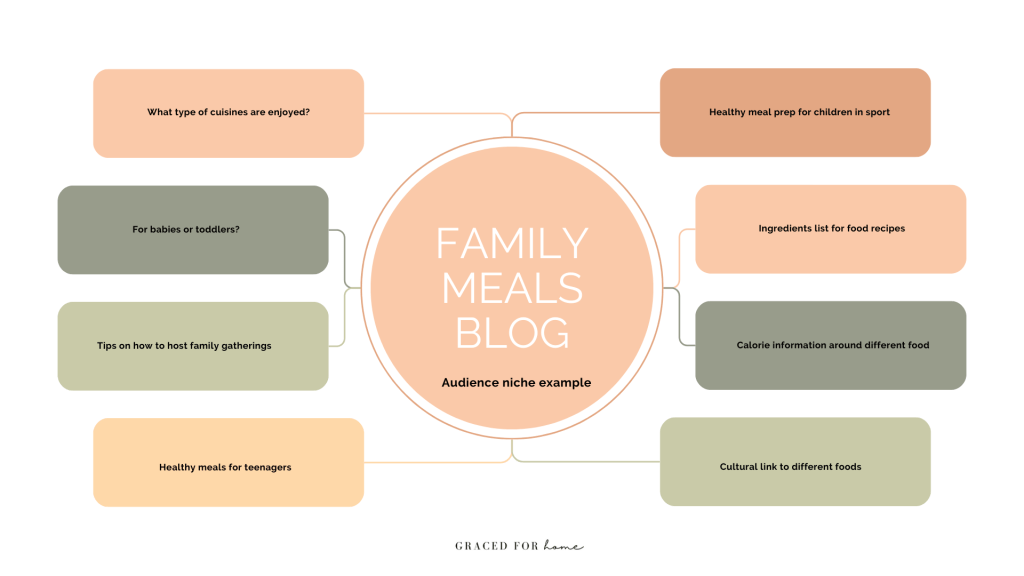
Finding your niche audience is a crucial step in building a successful blog or business. Most likely, your area of interest is broad (e.g. I enjoy content around cooking meals for my family). This passion is completely fine, but we can niche down even more. What type of cuisines are enjoyed? why? Any health benefits? cultural interests or preferences? Are we cooking for babies, toddlers, teenagers, or thinking about hosting for large or small family gatherings? Are we adding the whole hosting (decor items) into the mix or are we thinking purely about the food preparation? Is the content around the purchasing of the food (and where to buy the most affordable ingredients), or the actual cooking and plating of it?
See what I’ve done there? There are so many ways that you can look at just one area of interest and break it down. As you break it down, the audience is niched down and this is great because you can then get more specific, and this means you’ll be able to offer specific advice that will actually be valuable to your audience! Value equals potential for consistent and good income.
Step 3: Pick your blog name
You may have a name picked out already, but if you are struggling in this area I would say don’t stress too much about getting the perfect name for your blog right now– what you blog about is much more important than the name you choose. The name will eventually come to you. It may end up being a fun quirky name, or a straight to the point name.
Either way, you can think about something that will be memorable, not too long and possibly relevant to your topic and audience. Once you know what purpose your blog will serve, you could add in that in the title of your blog e.g. ourfamilymeals.com. A name like this gives your reader instant information about what your blog will center on. If it’s a real struggle you could also just use your own name as your blog title! The benefits of having your own name as your blog is that it’s unique and branded, but also generic enough so you can blog about any topic. Using websites to help you think of blog names is also a great way to get the ideas flowing.
Once you have decided on a name, you can search for it in domain websites to see if it doesn’t already exist. If you want to, you can purchase the domain name so it’s ready for your website.
Once you have thought of a name you can go ahead and also create a cute logo in an editing suite. Again you don’t have to have it completely figured out at this stage as most likely, you’ll evolve and develop your branding into something stunningly beautiful as time goes on.
Step 4: Decide where you want to host your lovely blog
A hosting website service, is a platform that provides the technologies and services needed for a website to be accessible on the Internet. When you create a website, you need to store its files on a server, and web hosting companies provide the space on their servers to store your website’s files.
Key Features of Web Hosting Services:
- Server Space: The core service offered by web hosting providers is server space where your website’s files, databases, and applications are stored.
- Domain Name Registration: Many hosting services also offer domain name registration services, allowing you to secure and register the address of your website (e.g., www.yourwebsite.com).
- Bandwidth: Hosting services provide a certain amount of bandwidth, which is the amount of data that can be transferred between your website and its users. Higher bandwidth is necessary for websites with high traffic.
- Email Accounts: Hosting providers often include email hosting, allowing you to create professional email addresses (e.g., name@yourwebsite.com).
- Security Features: These include SSL certificates, firewalls, malware scanning, and other security measures to protect your website from cyber threats.
- Database Support: Many websites require databases to function (e.g., MySQL, PostgreSQL), and hosting services offer support for these databases.
- Technical Support: Reliable customer support is crucial for addressing any issues or downtime that may occur.
- Backup Services: Regular backups of your website’s data are essential to prevent data loss in case of hardware failure or other issues.
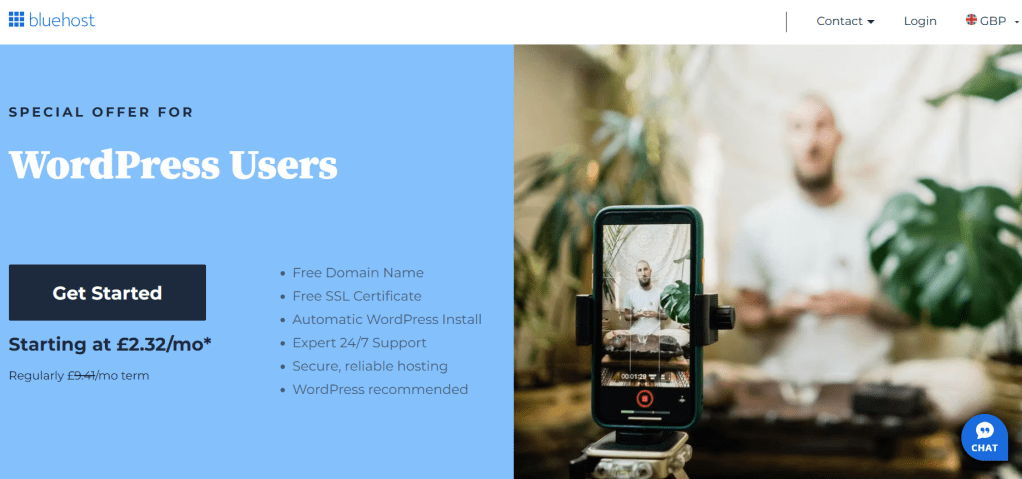
For most users, Bluehost and Cloudways is a great beginner friendly place to start.
There are free platforms out there, such as Blogger and WordPress.com, and they are great for hobby blogs – but if you want to monetise your site, it’s best to have a dedicated blog that is self-hosted, where you control all of the content and have complete ownership of it.
I have always used WordPress.org and found it to be such a robust and reliable website that does it all! A self hosted website on WordPress.org will mean that you control your content and can monetise as your please.
Installing WordPress
You can now install WordPress and start building your site!
The homepage will look like this: Select “Set up with a hosting provider”.
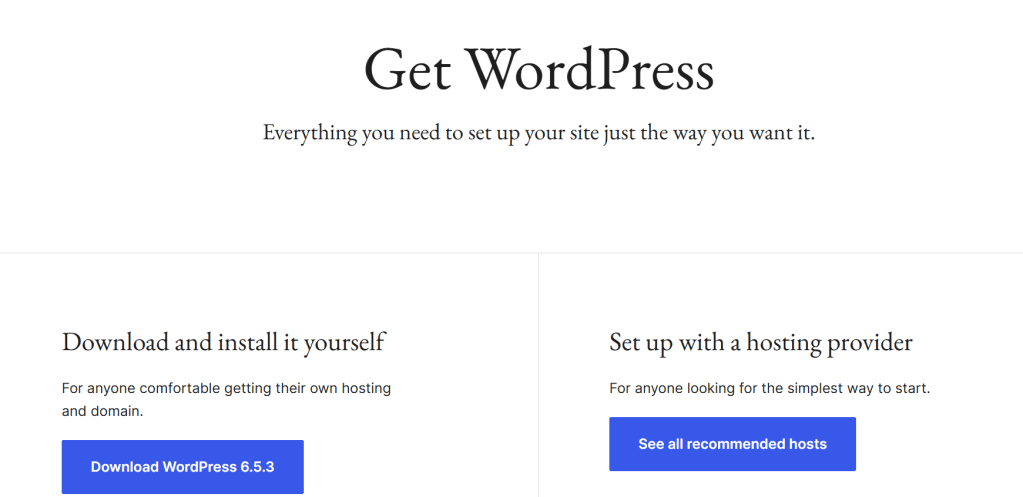
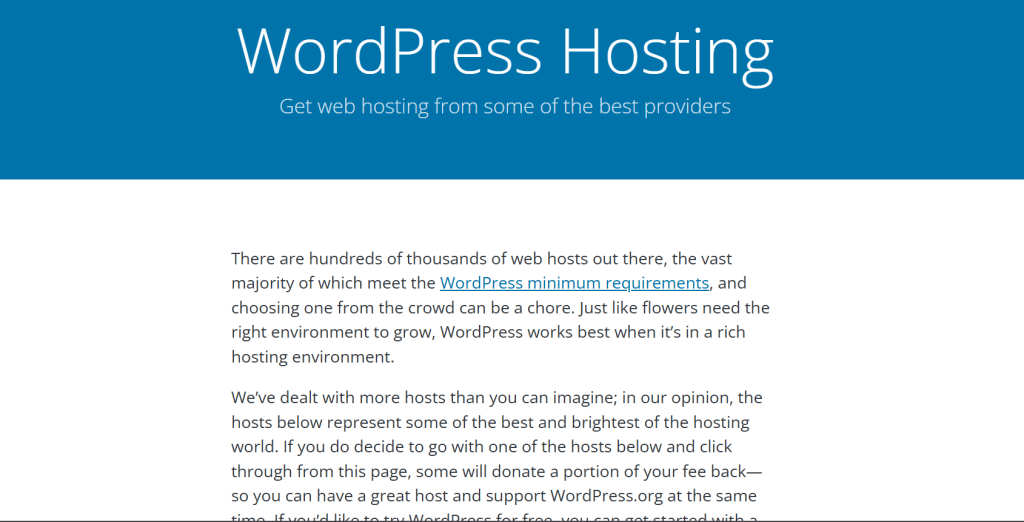
This will take you to a page where you will have the option to select a hosting provider – Bluehost.
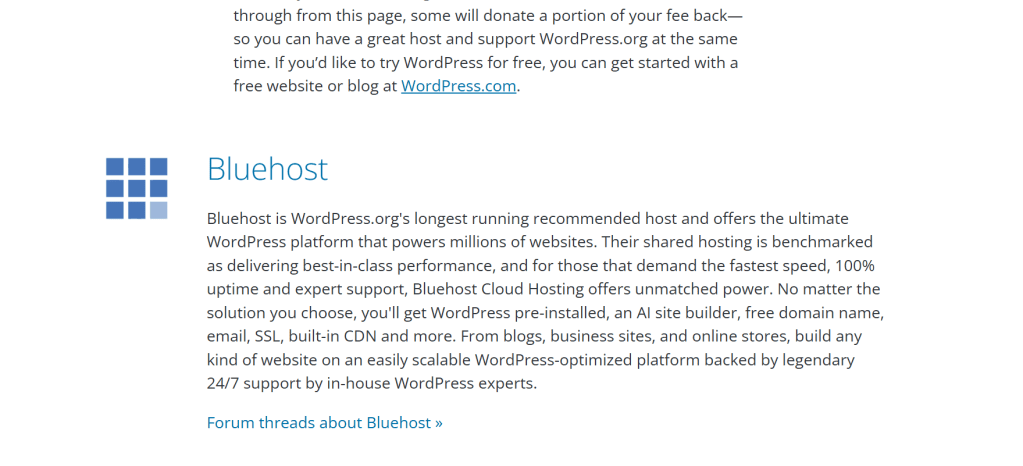
Once you select that option it’ll take you to the Bluehost website where you follow the instructions, purchase the first simple plan, and create your domain name- linking it with your hosting site and blog site.
Step 5: Navigating WordPress and writing your first blog post
All set up? Fantastic! Congratulations! This is an exciting step to launching your wonderful valuable business! Once you have logged into your new WordPress site (be sure to safely record your password details) you’ll see a homepage that looks similar to the below:
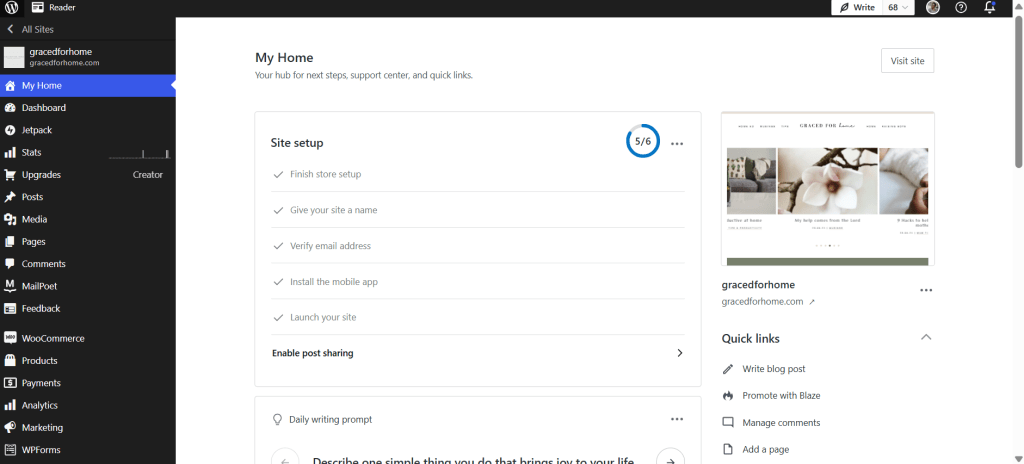
Spend some time going through the various settings. It may be confusing at first and overwhelming, but over time, it will all start to look familiar, and you’ll be enjoying all the great benefits of this powerful site. One of the first settings I recommend you change is the permalink structure. Click on “Settings” and then “Permalinks.”
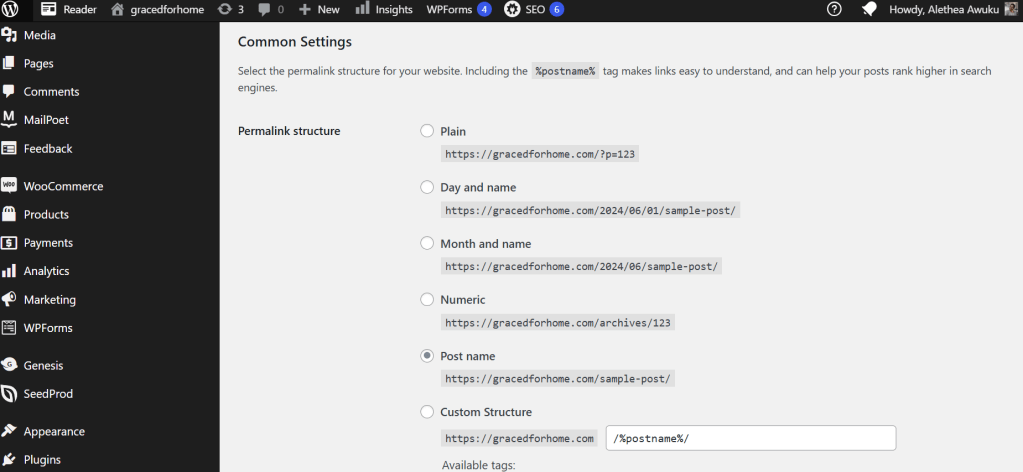
Select the “Post Name” option. It’s important to make this change before you start publishing posts. Once you publish and have inbound links to your posts, it’s a little more difficult to change the URL structure.
Some of the areas in the left hand menu that you’ll need to familiarise yourself with are the Posts, Plugins and Widgets and themes! Installing a theme is really the fun part where you can customise and personalise your site to really reflect your style, or the style of your target audience!.
You can find out more detailed information regarding your dashboard on the WordPress site.
Step 6: Writing your first few blog posts
Once you know what your audience wants to see and know, and you figure out how to create value in your own unique way using your own unique voice, the next step is to create the content- aka write your blog posts! If you aren’t familiar with writing blog posts, this can take some time as you figure out. I would start with a few pillar posts. Your intial brainstorm activity would have given you enough information to know what you want to say, and how you want to present yourself to your audience.
One of the first things that I learnt when starting to think about blogging seriously was the fact that it’s super important to circulate your content around three different types of blog posts when you are just starting:
- A blog post dedicated to growing traffic (offering valuable information)
- A blog post to help make money (a recommendation post with links)
- A blog post that grows your email list (offering something for free for a signup)
See examples of what post titles could look like if your blog was about making family meals:
- Your traffic post could be, “How to feed your family on a small budget.”
- Your money making post would be, “The Best Airfryer that saves time and makes food taste delicious.”
- And your email list post could be, “The family meal plan that will save you time and money – free PDF”.
Keep building on this, giving relevant, relatable and valuable content.
Step 7: Add Standard Blog Pages
Setting up a few pillar posts, as well as foundational things in the first stage will help you build momentum, and will serve as a great central core for you to come back to if you need a reminder of what your blog is about and what you want to do. These posts can always be edited and updated in the future, but for now they are great to start with:
- 5 Pillar Posts
- A clear blog menu (what are the core areas of your blog purpose)
- A good profile picture (take one in natural lighting)
- An About Me page
- A Disclosure Page – if you plan on using affiliate marketing and selling on your site
- A way to contact you (you can add this to your About Me page)
- Links to your social media pages
Step 8: Decide on a Blog Posting Schedule
When you are first getting started it can be hard to post consistently if you aren’t used to it. But it’s crucial if you are going to build momentum, and get clearer on what you are offering to your audience. Here, I would suggest building a library of posts quite quickly so that readers have something to browse when they land on your website. Once you have 10-15 posts in place, it would be helpful to you to develop a consistent posting schedule so you don’t get overwhelmed and can give yourself time to think about what you want to write.
Common schedules include daily posts for news or dynamic niches, weekly posts for consistent engagement, bi-weekly posts for higher quality content, and monthly posts for comprehensive, in-depth articles.
You could plan your content calendar by brainstorming relevant topics and varying the types of content, such as how-tos, listicles, interviews, and reviews. Include seasonal and timely posts that align with holidays, seasons, or industry events, and ensure you have buffer time for editing and unforeseen delays. Use tools like Trello, Asana, or Google Calendar to organise your schedule, and leverage CMS platforms like WordPress for built-in scheduling features. Regularly monitor performance using analytics tools like Google Analytics, and be ready to adjust your schedule based on performance data and audience feedback.
For example, a balanced weekly blog schedule might involve publishing a new post on Monday, promoting it on social media on Tuesday, engaging with reader comments on Wednesday, conducting keyword research and outlining the next post on Thursday, writing and editing on Friday, taking a break or focusing on other activities on Saturday, and doing a final review on Sunday. By following these steps, you can develop a blog posting schedule that aligns with your goals and resources while keeping your audience engaged and eager for more content.
When you are posting at the same days and times each week, you become part of your readers’ routines and they come to expect your new posts, which makes it easier to build up a loyal community. The number of times per week or month that you post is up to you. Think about how many helpful blog posts you can publish on a consistent basis, and make that number work for you.
Step 9: Promoting your blog
It goes without saying that one of the first areas that is helpful to think about when promoting your blog and its content is social media. Leveraging social media by choosing platforms where your target audience is most active, such as Facebook, Instagram, and Pinterest is great as you’ll be able to build community and interested and engaged followers. Creating a consistent posting schedule will be very useful in establishing yourself as a reliable and go to person for your content which is exactly what we want!
Additionally, optimising your blog for search engines (SEO) is essential. Conduct keyword research using tools like Google Keyword Planner or SEMrush to find relevant keywords and incorporate them naturally into your blog posts. Optimise your titles, headings, meta descriptions, and images with appropriate keywords, and use internal linking to improve navigation and SEO.
Building an email list is another powerful strategy for promoting and growing your blog. Offer a freebie such as an e-book, checklist, or exclusive content to encourage sign-ups, and send regular newsletters with updates, exclusive content, and promotions (if relevant). To enhance this, you can segment your email list to tailor content to different audience segments based on what they respond to; increasing engagement. Collaborating with other bloggers in your industry or area of interest is also a fantastic way of extending your reach to new audiences. You could also write guest posts for other blogs in your niche, engage in link exchanges to boost SEO and referral traffic, and partner for joint giveaways, webinars, or social media takeovers.
Utilising paid advertising to reach a broader audience can be very effective. Facebook Ads, Google AdWords, and Pinterest Ads can effectively drive targeted traffic to your blog. Creating high-quality, shareable content is crucial so do your best to use high-quality images and infographics, write comprehensive guides and how-to posts, and offer content upgrades like printable PDFs to encourage sharing and engagement. Engage in online communities by joining and participating in Facebook groups, answering questions on forums and Q&A sites like Quora, and leaving thoughtful comments on other blogs.
Networking offline can also be beneficial if that interests you or is your preference! Attending local events, meetups, and conferences related to your niche, and hosting or participating in workshops and classes to establish yourself as an authority is a great way to meet others, widen your reach and have fun immersing yourself in an interest.
Offering affiliate marketing is another way to monetise your blog. Join affiliate programs relevant to your niche, include affiliate links in your blog posts, and write detailed reviews of products you genuinely use and love. Always disclose your use of affiliate links to maintain transparency and trust with your readers. If you come across as genuine and honest in this area, you could see a real surge in your income with blogging as we are all looking for someone to share things honestly with us that will transform our lives in one way or another.
There are so many other areas that you could look at when it comes to monetising your blog, but for now I think these suggestions are enough to help you soar when learnt, implemented and mastered over time. By adopting these strategies, you can effectively promote your blog, build a loyal audience, and start generating income from your blogging efforts. Consistency and genuine engagement with your audience are key to long-term success and you can do it!
Step 10: Selling Digital Products
In this last but not least section (I could honestly keep going on!) I want to talk about digital products because when done well, and marketed well, they can be a great source of income. With this model, you create something — maybe an eBook, course, printables, and sell it to your readers on your blog. The great benefits of digital products are that you only have to do the work once when you create it. Then all you have to do is market it to your audience in the right way, or even upload it to popular sites such as Etsy, and you’ll receive an income each time you make a sale.
Unlike physical products, digital products have low production and distribution costs, allowing for significant profit potential. They enable you to leverage your expertise and provide valuable content to your audience in a more in-depth format, enhancing your authority and credibility in your niche. Additionally, digital products can be sold repeatedly without the need for inventory, making them a sustainable income source.
They also offer flexibility, as you can create and sell products tailored to your audience’s needs and preferences, leading to higher customer satisfaction and loyalty.
Conclusion
SO there you go! What I hope is a helpful guide to help you mama. Blogging has the potential to be an incredibly lucrative business if we work consistently at it. By implementing one or more of the strategies shared above, your income could go from £0 to more than £100 a month to several thousand pounds per month over time!
Why do you want to start a blog? Leave your reply below, even if it’s just a few words!
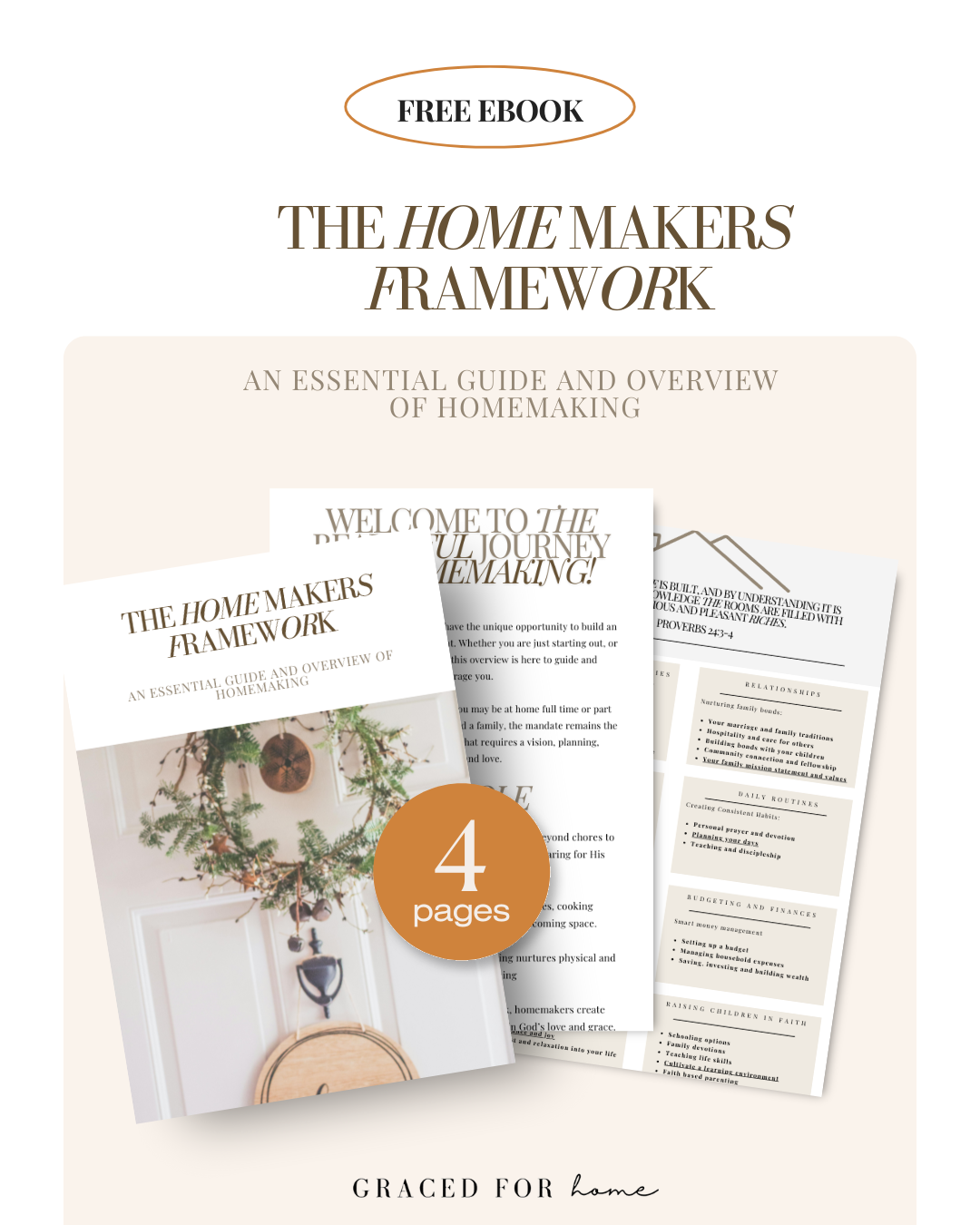
Discover the joy and fulfillment of creating a loving, organised, and faith-filled home! Download my free eBook, “The Homemakers Framework,” for practical tips, encouragement, and inspiration tailored for mothers and homemakers. Start your journey towards mastering home management and nurturing your family’s well-being today. Get your free copy now and transform your home into a sanctuary of love and grace!
 gracedforhome.com
One thought on “How to Start a Blog in 10 Easy Steps”