
Disclosure: This post contains affiliate links, which means I make a small commission at no extra cost to you. See my full disclosure here.
Homeschooling our boys has so far been such an exciting and full on journey! We are delving head on into wonder-filled discovery and it has been both my challenge and joy to help the boys lean more into their learning styles, as well as value and enjoy the process of learning! Hands up if you are the type of mum that picks up every educational book because you just KNOW that it’ll add value to their learning experience? Or was it at a price that you couldn’t resist? ha!
One of the challenges with Home Ed is keeping all your things organised! Managing books, supplies, toys and resources can quickly become overwhelming if not handled with care. An organised homeschool space is crucial for maintaining a productive and stress-free learning atmosphere – no matter the size of your space. Here are some practical tips to help you create an organised and efficient homeschool environment.
1. Create a dedicated homeschool space
One of the beauties of homeschooling is that we can create a beautiful seamless flow between home life and learning. I think even with this though, when it comes to some sit down learning, it’s useful to designate a specific area in your home for homeschooling. This space doesn’t need to be a separate room; a corner of a living room, dining table, or dining area can work just fine. The key is to have a consistent place where all specific learning activities take place and where all materials are stored.
A designated learning space helps to minimise distractions that are common in other parts of the house. It provides a controlled environment where toys, TV, and other household activities are not within immediate reach, encouraging and training our children’s minds to concentrate. Also, if you have multiple children who do not learn together, you can create separate play/learning areas so each child can focus on what they are doing.
Also, for us mamas, it helps us to feel organised and in control of the homeschooling process. This designated area allows for all educational materials, books, and supplies to be kept in one place, reducing clutter and the stress of searching for items when needed. It also establishes a clear routine and structure within our home, making it easier for us to manage daily schedules and transitions between activities. Knowing that there is a specific, orderly spot for learning activities not only streamlines the homeschooling process but also creates a sense of calm and efficiency (I play instrumentals on the speaker when my eldest is learning at the table).
2. Use bookshelves wisely
Books are an essential part of homeschooling! They transport us to the world, and fill our hearts and minds with such wonder. I am a big fan of books and I am working so intentionally to make it part of the children’s lives. When we started homeschooling, one of the first things I was told was “all you need is a Bible and a library card”. Books at home can quickly accumulate though without you realising it! Invest in sturdy bookshelves to keep them organised. Here are some ways that we have used bookshelves and been creative with them!
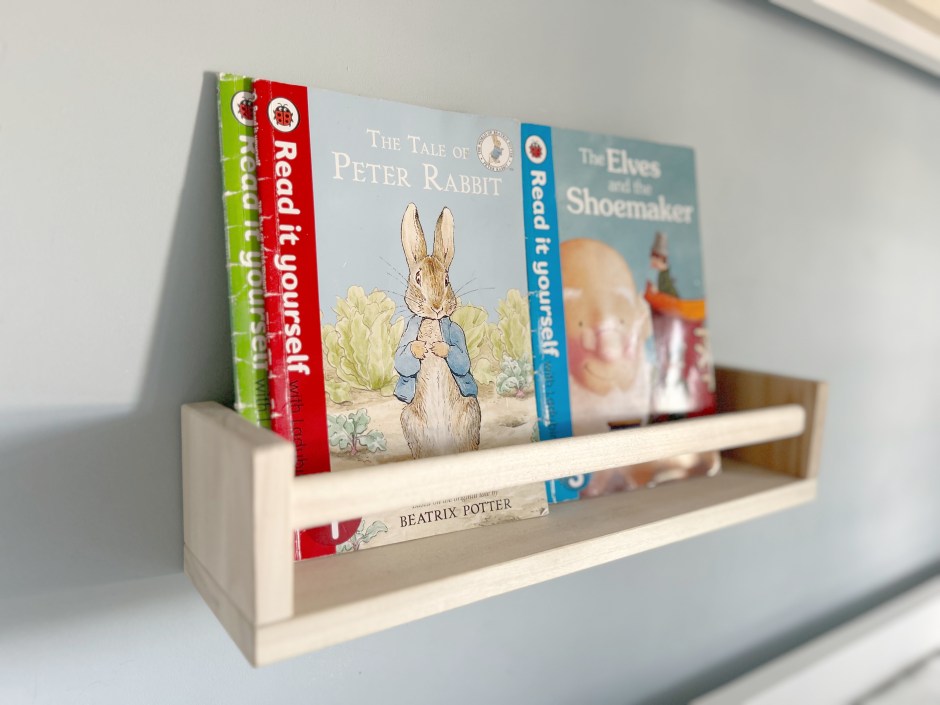
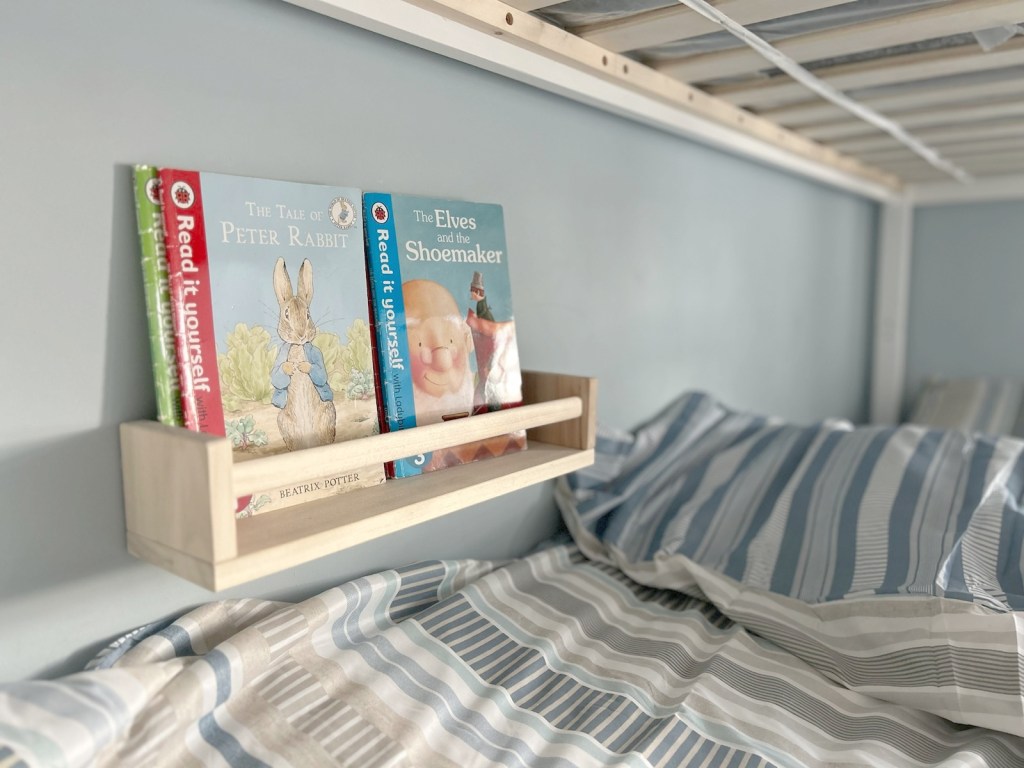
Floating mounted book shelves by each boys sleeping area has been a great addition to the boys room. I wanted to create a private and personal area for them to keep their most favourite books that they could read in bed either in the morning if they wake up early or the evening before they go to sleep.

An accessible book case is also great for encouraging independent reading and access to books. By having a dedicated space at their height, children can independently explore and choose books that pique their interest and this creates a sense of ownership and excitement about reading. Even my 2 year old enjoys taking books from the shelf!
Book bins are also utilised for taller books, and to make it more fun for the children, we have them placed in different locations of the house. These bins are regularly rotated to keep the interest, as they don’t know what treasures they’ll find in them!
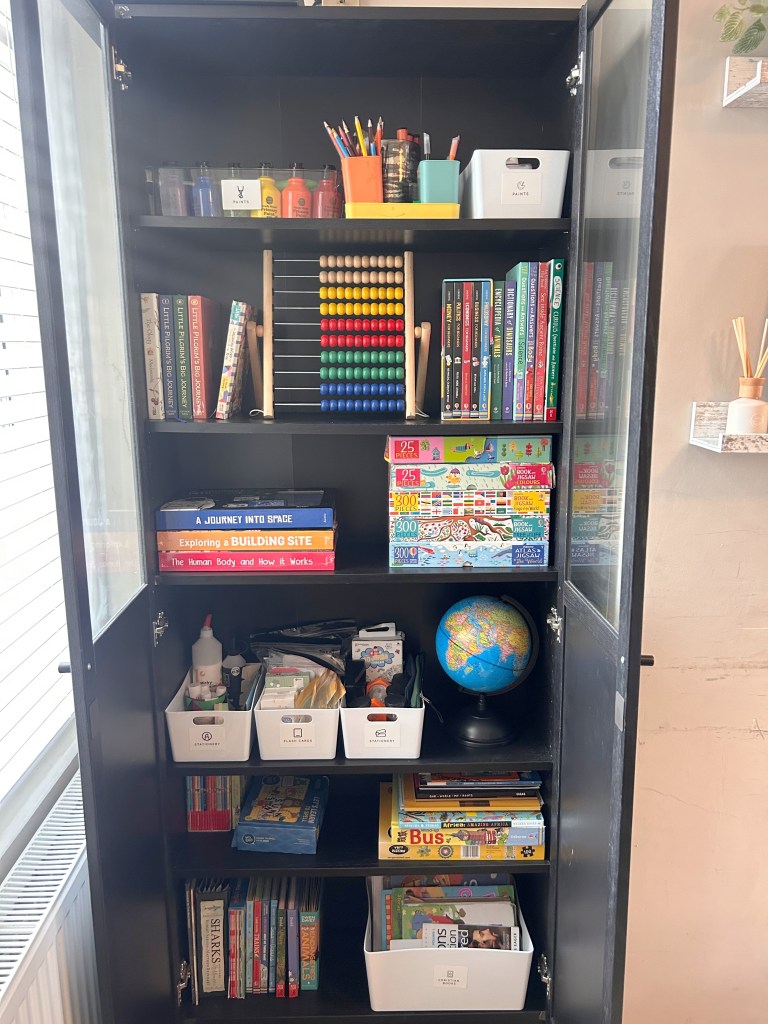
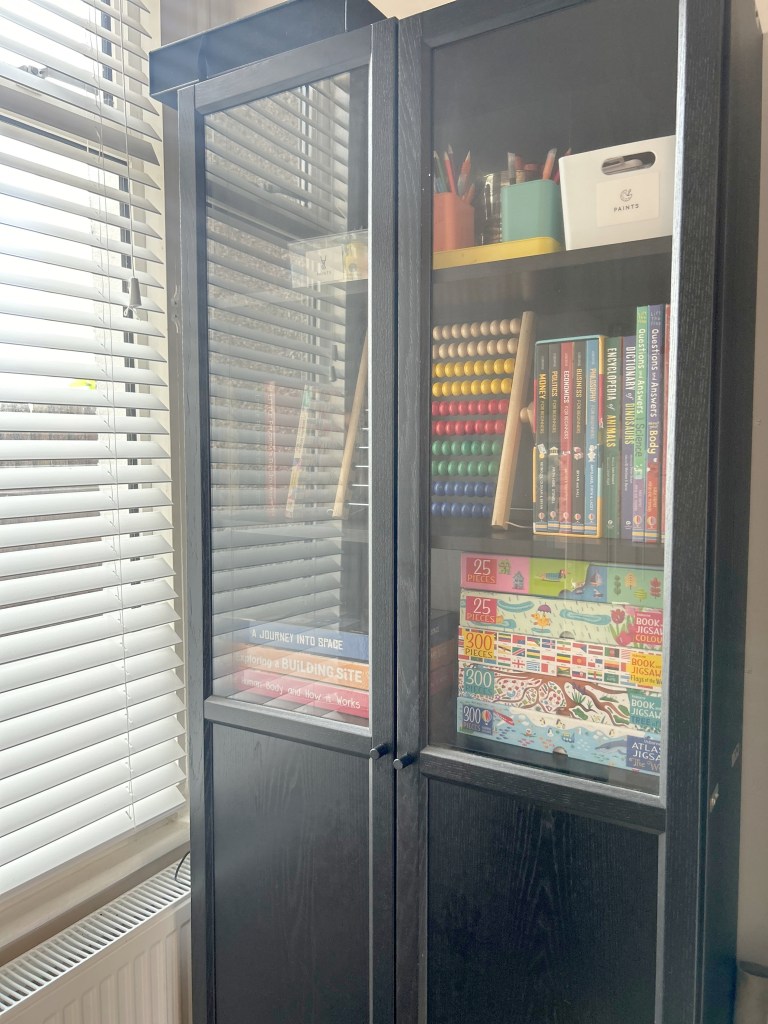
An IKEA Bookcase with panel/glass doors is used to store books and resources that need to be out of reach of young hands, as well as books that are little advanced for them at this stage (but I am still buying or collecting!) We chose the book shelf with panels/doors to create a visually appealing area that is attractive to the eye.
3. Incorporate storage bins and containers
Storage bins and containers are lifesavers for organising homeschool books because they provide a practical and efficient way to keep materials orderly and accessible. With homeschooling often involving numerous books, workbooks, and supplies, these bins and containers help categorise and store items neatly, preventing clutter and making it easier to find specific resources quickly.
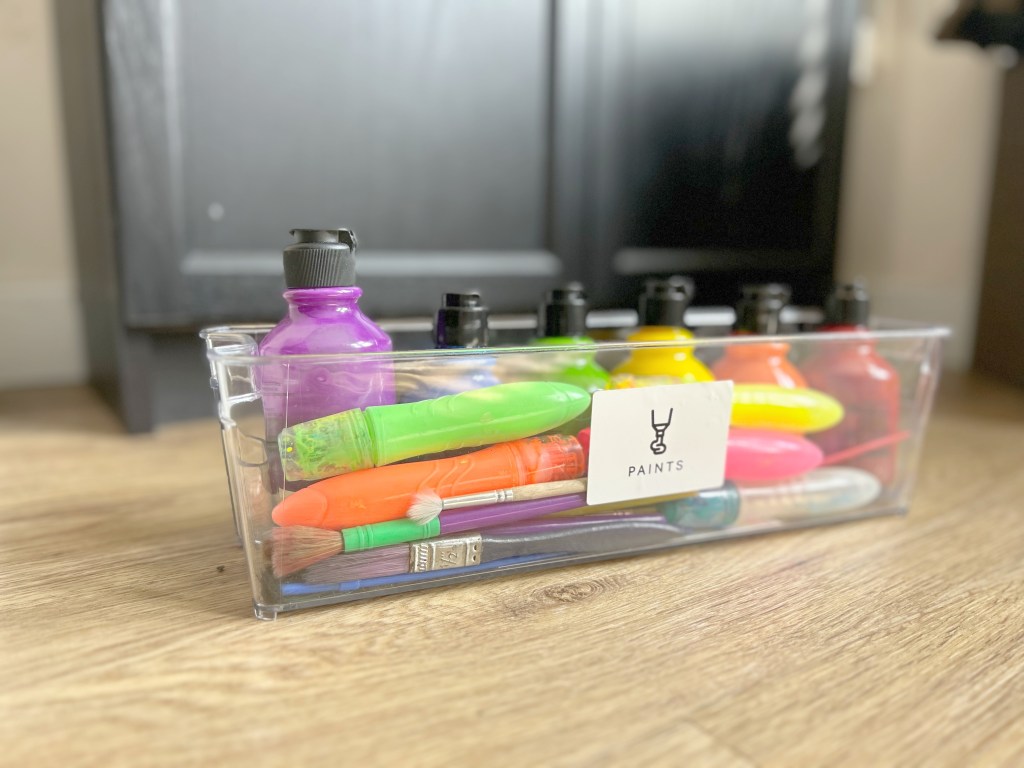
They can be labelled and colour-coded, further enhancing the organisation and allowing for easy rotation of subjects or materials. Additionally, using storage solutions helps maintain a tidy learning environment, which can reduce distractions and create a more focused, productive space for both teaching and learning. This organisation not only streamlines the homeschooling process (allowing you to see exactly the things that you have) but it also instills good habits of tidiness and responsibility in our children.
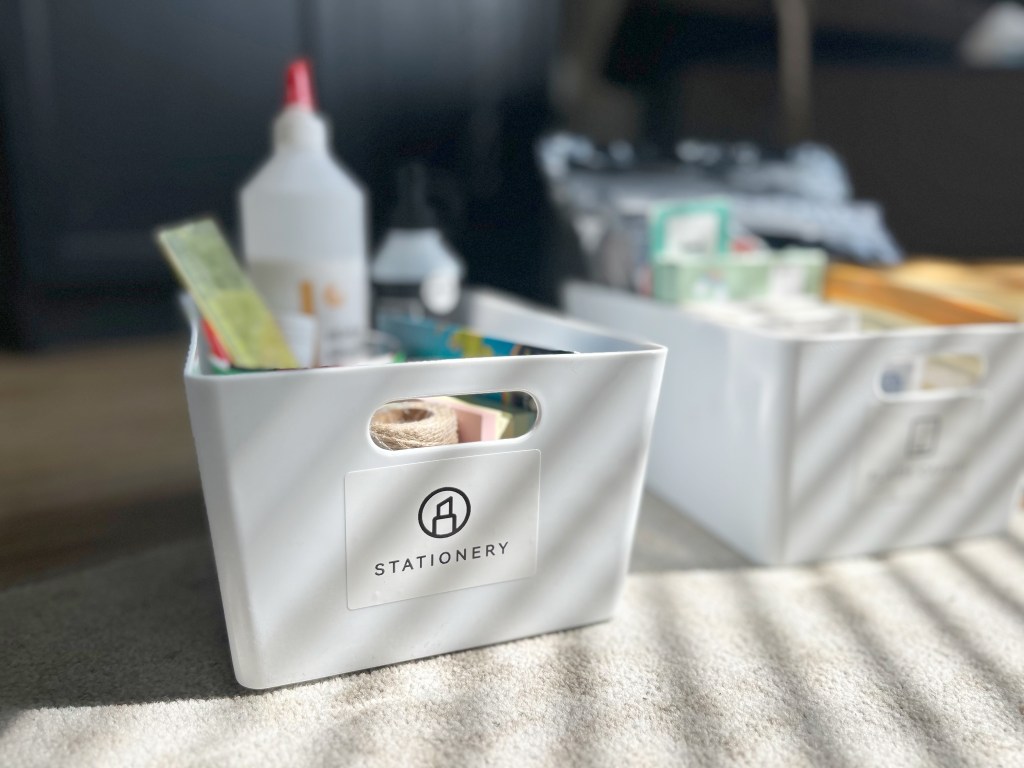
Use clear bins to store art supplies, science kits, math manipulatives, and other materials. Label each bin clearly to make it easy for your children to find what they need and to put things back in their proper place.
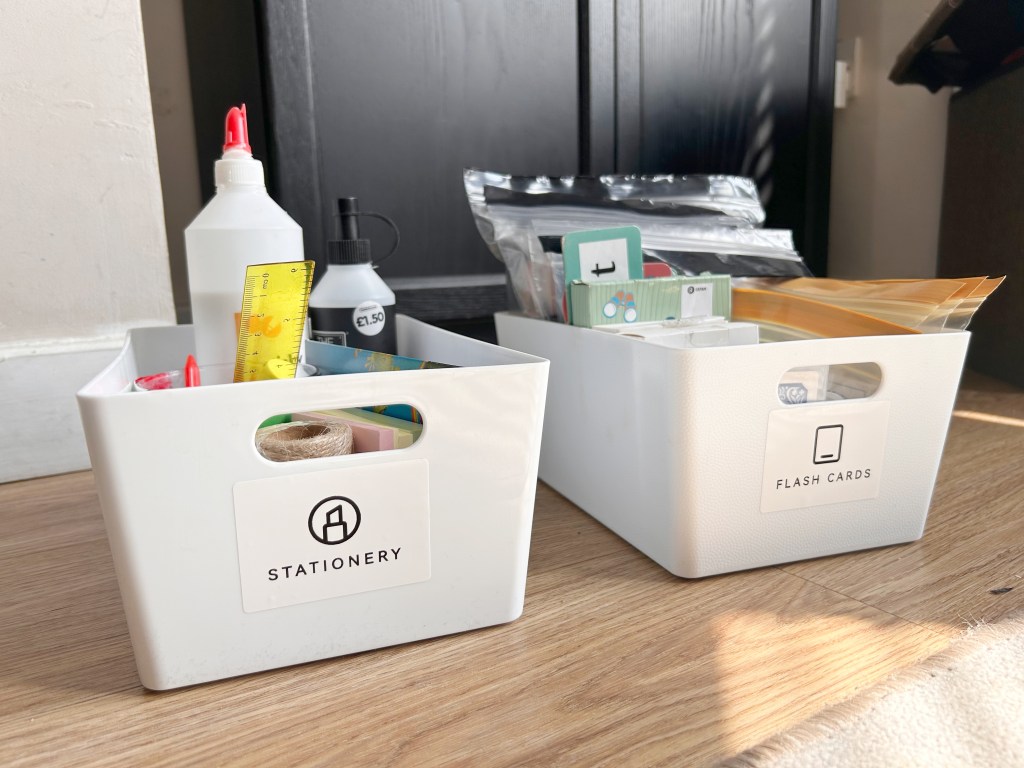
4. Implement a rotating system for supplies
To prevent clutter and ensure that all of your materials are used, implement a rotating system. It’s so helpful especially when we often tempted to add more when we are out and about in the shops. Creating a rotation system can help keep things fresh for us too. Store out-of-season or future materials in a closet or storage area, and bring them out when needed. This keeps your main homeschooling space tidy and focused.
5. Utilise a rolling cart

A rolling cart can be a versatile addition to your homeschool setup and I know a few homeschool mamas who use them. We use a tower drawer unit as I found it more handy to throw toys into when they weren’t in use. Also, I feels easier to keep things neater. You can use either to keep daily essentials like current textbooks, planners, and supplies handy. At the end of the day, It can be rolled away, or picked up and moved to keep your space clutter-free. They are both great options for moving materials from room to room if you don’t have a dedicated homeschool space.
6. Set up a command center
A command center helps to encourage proactivity and focus on daily activities. Using a bulletin board or wall organiser to display your family’s daily schedule, calendar, chore charts, and important notices is crucial for maintaining order and clarity in your household and homeschooling experience.
As busy parents, having a visible, centralised spot for all essential information helps everyone stay on the same page and creates a sense of responsibility and routine among everyone. It ensures that daily activities, appointments, and chores are clearly communicated, reducing the likelihood of missed tasks or misunderstandings. We use yearly calendars, as well as a large whiteboard in the kitchen to help us bring together the many moving parts in our home.
This visual organisation tool can also serve as a motivational center, where achievements and important reminders are highlighted, promoting a positive and proactive household environment. By keeping everything in plain sight, a bulletin board or wall organiser simplifies the juggling act of family life, making it easier to manage time, responsibilities, and expectations effectively.
7. Establish a filing system
Creating a filing system for important papers, assignments, and records is key! You could use a filing cabinet or portable file box to organise by subject or student. This system will make it easier to keep track of completed work and necessary documents as your children grow older.
Organising your homeschool and your home doesn’t have to be a daunting task. With a bit of planning and creativity, you can create a learning environment that is both functional and inspiring. Remember, the goal is to make your space work for you and your children, fostering a love for learning and making homeschooling a joyful experience for everyone involved.
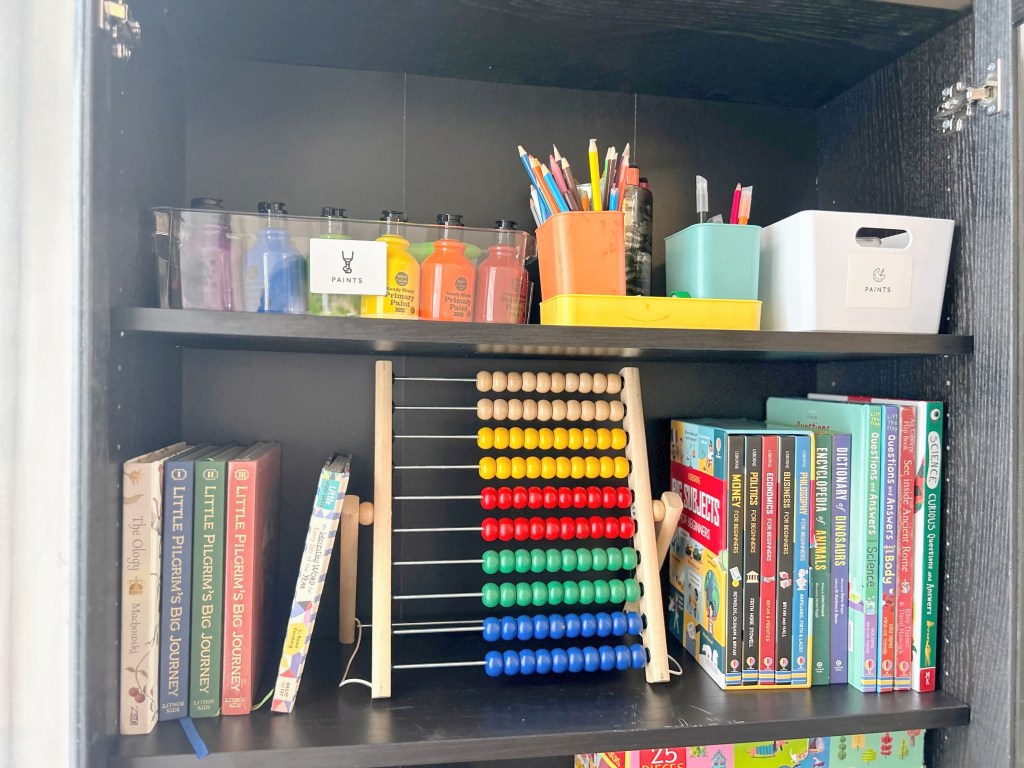
Happy organising and a massive thank you to a dear friend of mine Karla from Klear My Space who helped me sort through and organise my boys things. She’s a wonderful, a reliable and professional home decluttering and organising solutions person who is just a phone call away if you need some help!
Thank you for joining me on this journey of motherhood and faith. If you found comfort and encouragement in this post, I invite you to explore more of my writings on similar topics.
How do I balance family and personal life?
9 hacks to help you thrive in motherhood
Affirmations for mothers at home
On my blog, you’ll discover a wealth of stories, tips, and reflections aimed at nurturing your spirit and supporting you through the beautiful chaos of motherhood.
From practical advice on balancing daily responsibilities to heartfelt reflections on deepening your relationship with God, there’s something for every season of motherhood. I’ve shared real-life experiences, lessons learned, and moments of grace that I hope will resonate with you and provide the encouragement you need.
Visit my blog for more posts on creating a peaceful home, finding joy in the little moments, and leaning into God’s strength amidst the challenges. Let’s continue this journey together, growing in faith and love, one step at a time.
Alethea
 gracedforhome.com